Property data in too many places
The lease is in a shared folder, the tenant’s number is in someone’s phone and the last repair is in an email thread. Answering one tenant question means checking all three.

ERPNext industry solutions
IBAN implements ERPNext for real estate companies in Saudi Arabia: property records, contracts and rent collection, development projects and the accounts behind them.
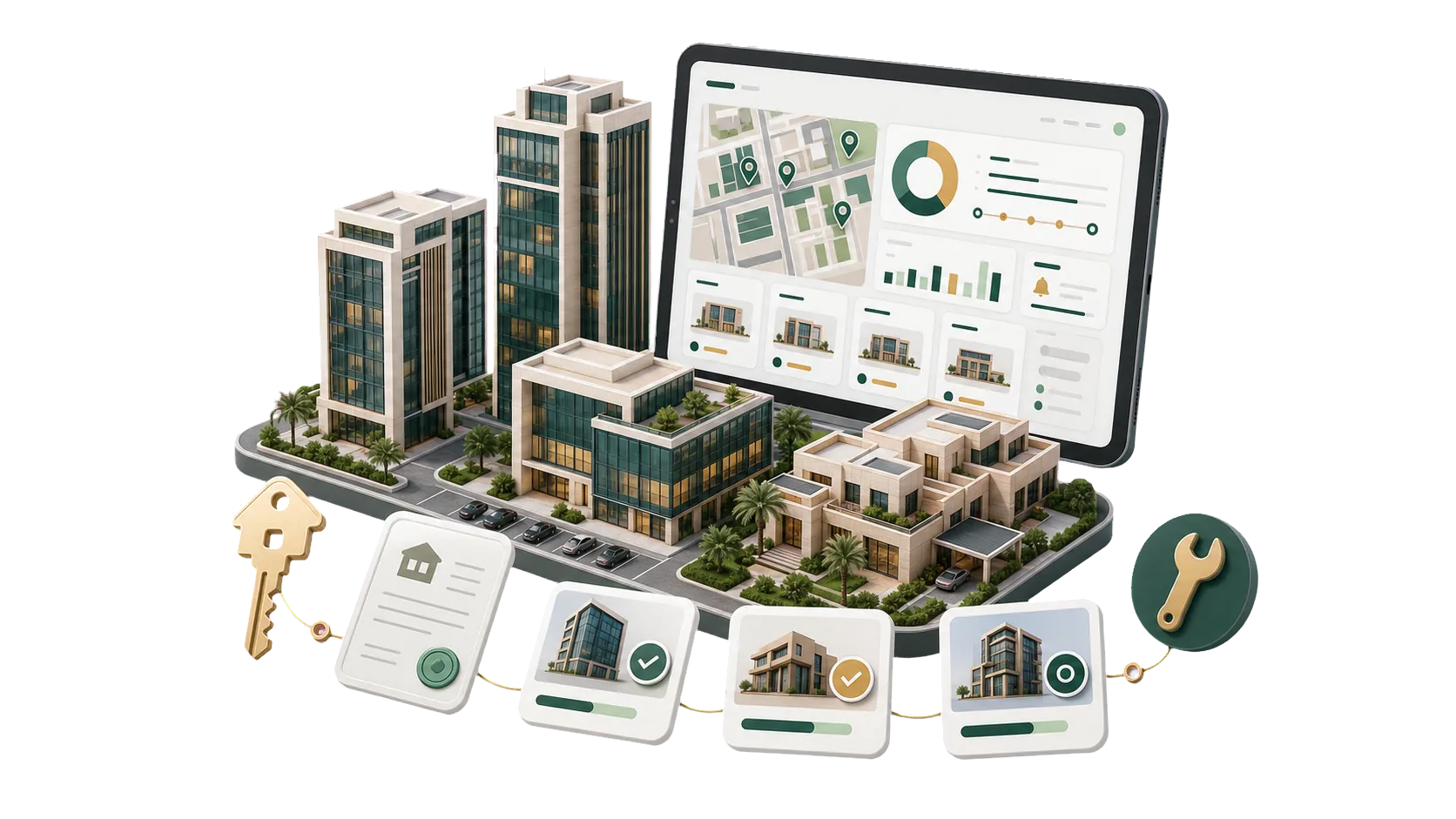
These are the problems we hear about most in first meetings. Further down, you can see how each one is handled in ERPNext.
The lease is in a shared folder, the tenant’s number is in someone’s phone and the last repair is in an email thread. Answering one tenant question means checking all three.
If due dates are not tied to invoices, overdue rent only surfaces when someone goes looking. Once rent is invoiced in ERPNext, the Accounts Receivable report shows who owes what and for how long.
Leasing teams need to know which units are rented, which leases end soon and what is available today. Without that, empty units stay empty longer.
When asset, lease and collection figures come from different files, the monthly report takes days to put together and is out of date when it lands.
Reminders, renewals and receipts handled by hand mean the same details get typed again and again. Every copy is another chance for a mistake.
If rent received and maintenance spent are not booked against each property, you can’t tell which buildings make money. A cost center per building fixes that.
The day-to-day work, and where each part of it connects to the accounts and to your reports.
Each building or unit you own can be recorded as an Asset, with its purchase details, location, depreciation and maintenance. ERPNext’s Asset Management module treats property as a tangible asset.
For leases and service charges, a Subscription raises the Sales Invoice on each billing date, so rent is billed on time without anyone having to remember it.
Development, fit-out and maintenance jobs run as Projects, with tasks, timesheets and purchase costs booked against each one.
Give each building its own cost center and the Profit and Loss statement shows rent, service fees and maintenance building by building.
It can be. ERPNext has no dedicated property management module, so we build the setup from standard ones: Asset Management for properties, Subscriptions for recurring rent, Projects for development and Accounting for the numbers. Anything specific to your contracts is added through configuration or customization.
Partly, out of the box. Asset Management records property as a tangible asset and tracks purchase details, depreciation, maintenance and disposal. Leasing details such as unit availability and renewal dates are set up during implementation.
Yes. Subscriptions and Subscription Plans set the price and billing interval, then create the invoices automatically each cycle. That suits monthly or quarterly rent and service fees.
Yes. The Projects module plans and tracks tasks, time and costs, which works well for development, fit-out and property maintenance.
Yes. ERPNext is built on the Frappe Framework, which lets us add fields, forms, reports and approval steps without changing the core code.
We look at how you manage properties, leases and collections today. Then we choose the modules, set them up for your portfolio and train your team.
Pick the service you need, leave your details, and we will get back to you shortly.
We start by looking at how you work today, then agree on the modules, integrations and reports you need before implementation begins.
Talk to an ERPNext expert