Control of every operation
Purchasing, production, sales and stock handled end to end, from the first order to the last delivery.

ERPNext solutions for factories
When production, stock and accounts each run in their own program, the factory gets managed in pieces. IBAN implements ERPNext so production, materials, costs and payroll work from the same records.
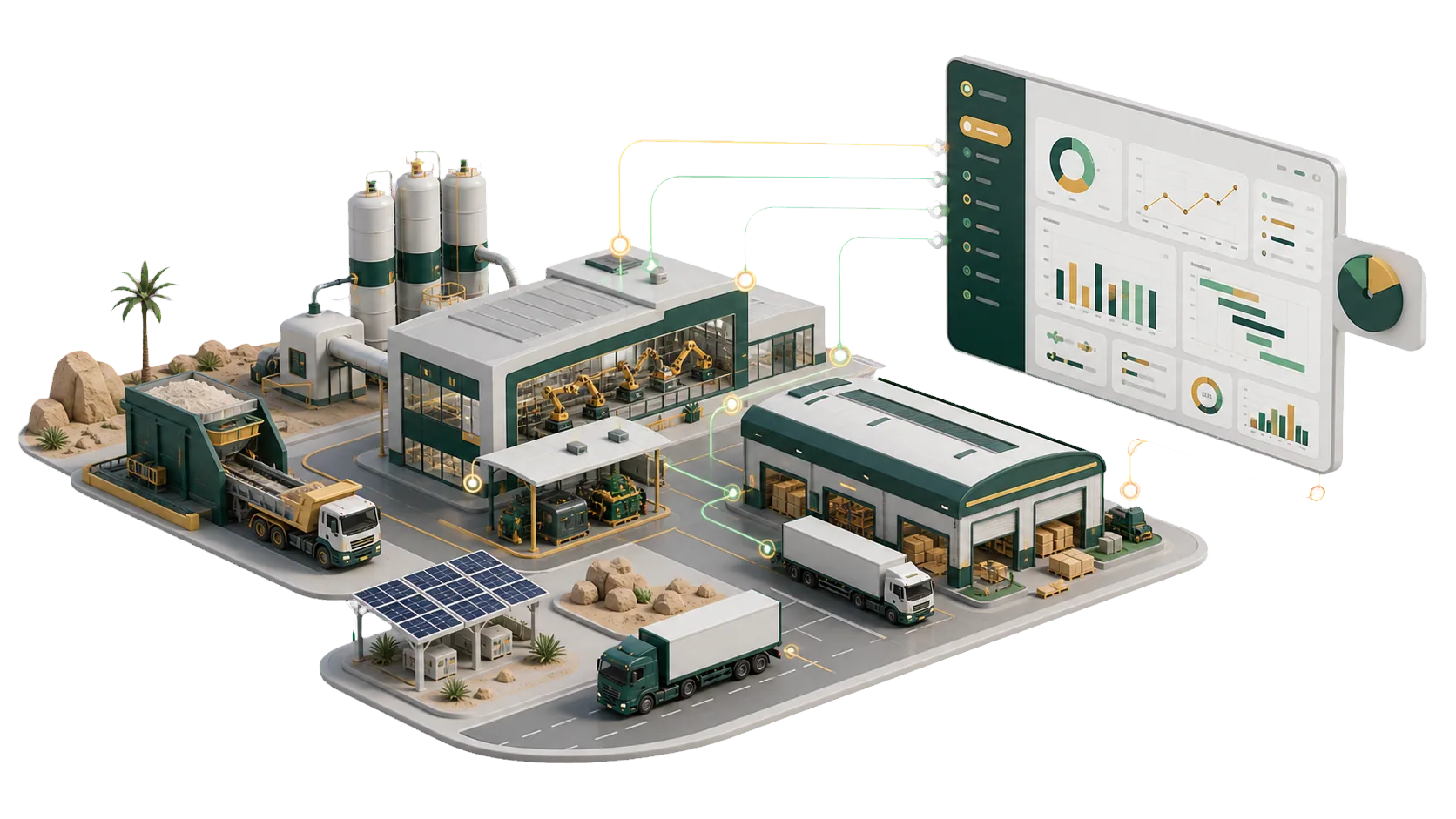
Purchasing, production, sales and stock handled end to end, from the first order to the last delivery.
Watch production lines and raw material use closely, so waste and idle machines show up early.
Live reports show how the factory is performing while there is still time to do something about it.
Finance works from the same transactions as operations, so the two teams stop reconciling each other’s figures.
ERPNext lets Saudi factories manage materials, machines, people and money from the same records, in software their teams can learn quickly.
Book a free consultation, and we will show you a demo built around your factory’s needs.
Book a free consultationThese are the problems factory owners bring to us most often. Nearly all of them start with each department keeping its own records.
Accounting in one program, inventory in a spreadsheet, production in a notebook. At the monthly review, the three sets of numbers never agree.
Unless materials, machine time, energy and scrap are booked to the work order, your unit cost is a guess.
Paper shift reports typed up the next day cost hours and let errors into your figures.
ZATCA e-invoicing calls for a proper integration, and VAT and zakat need figures you can defend. Temporary workarounds tend to break when the requirements are updated.
If you are unsure how much raw material is on hand, either the line stops or the store fills up with materials you won’t need for months.
Working out salaries and end-of-service benefits under Saudi rules by hand invites mistakes and disputes.
What the system does on the production line, in the warehouse and in finance.
Implemented by IBAN as your enterprise resource planning (ERP) system, ERPNext records each day’s production, stock, purchasing and sales as it happens. Management works from today’s figures instead of last month’s.
Sales order, work order, job cards on the floor, then delivery. Each document is created from the one before.
Stock moves with every production entry and sale, and reorder levels raise a Material Request when a raw material runs low.
A shortage becomes a Material Request, and the buyer turns it into a Purchase Order without re-entering the items.
Production and sales post straight to the accounts, and VAT is worked out on every invoice.
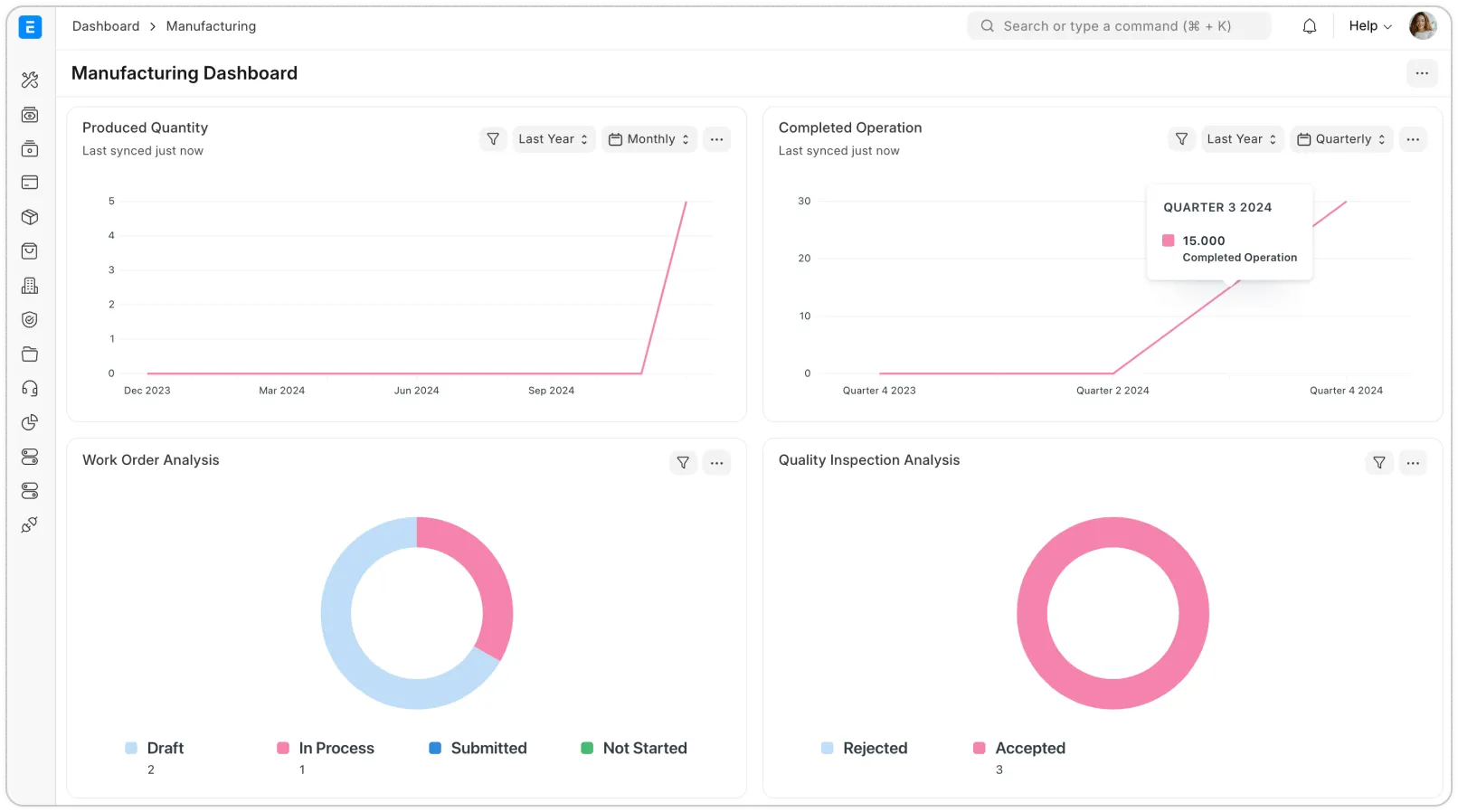
Unit cost, gross profit, production and sales on dashboards for senior management.
An illustrative juice bottling plant: one order followed from the sale to delivery and the invoice.
A customer orders 10,000 bottles of mango juice, and sales records a Sales Order.
The planner creates a Work Order from the Sales Order, and the BOM lists what it needs: 10,000 empty bottles, 5,000 liters of mango juice, 10,000 caps and labels.
Planning against stock shows only 3,000 bottles on hand, and a Material Request is raised for the shortfall.
Purchasing turns the Material Request into a Purchase Order for the approved supplier.
The bottles arrive on a Purchase Receipt, the store transfers the materials to the floor, and the work order starts.
Job cards follow each operation (mixing, filling, capping and labeling) at its workstation and record time, good output and scrap.
Reports compare planned and actual quantities and costs, show the scrap, and give the exact consumption of each material.
The finished bottles go into stock, and the raw materials used come out in the same entry.
The Delivery Note and Sales Invoice are created from the Sales Order, and every document links back to it.
The example plant above, before and after ERPNext.
| Indicator | Before ERPNext | After ERPNext |
|---|---|---|
| Waste rate | Not measured | Measured per work order |
| Production preparation time | Manual and imprecise | Planned in the system |
| Cost of excess materials | Not tracked | Visible on each order |
| Raw material control | Weak | Tracked in real time |
| Delivery and invoicing | Delayed | Created straight from the order |
Once the whole cycle runs in ERPNext, from sales order to delivery, waste, time and cost become measurable. That is where the savings start.
We don’t hand over a system and walk away. After go-live we keep working with you on what matters in a factory: waste, time on the line, and profit you can see in the accounts.
Yes. Production is linked to raw materials, stock, purchasing, accounting and HR, whether you run one small plant or several factories.
Each work order collects the materials consumed, operating time at workstation hour rates (which can include electricity) and any scrap. You can then compare planned and actual cost and see how much of each material went in.
Yes, through a ZATCA compliance app added to ERPNext. It covers Phase 1 and Phase 2 (integration phase), including clearance, reporting and the cryptographic stamp.
Yes. Payroll runs in Frappe HR, the HR app for ERPNext. It covers salaries, leave, attendance and end-of-service benefits, and we define the benefit rules to match your contracts and company policy.
Yes. We shape the system around your factory structure and production lines, with permissions and reports for each department.
We start with a review of how your factory works. Then we set up the system, train your team and stay on after go-live for support and advice.
Pick the service you need, leave your details, and we will get back to you shortly.
We implement ERPNext for other industries across Saudi Arabia too.